






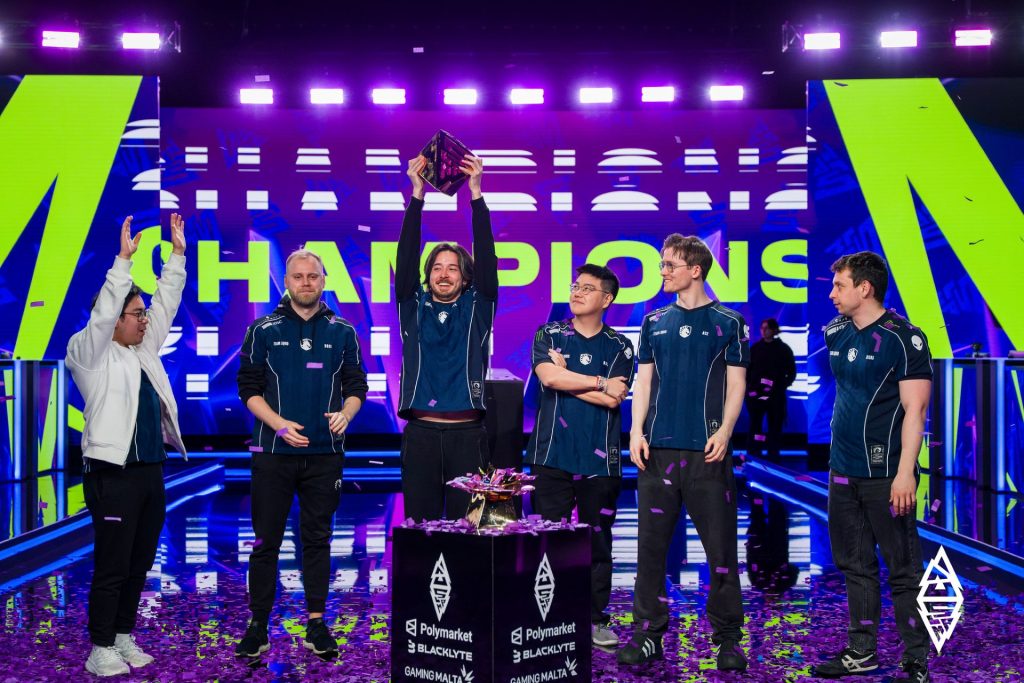
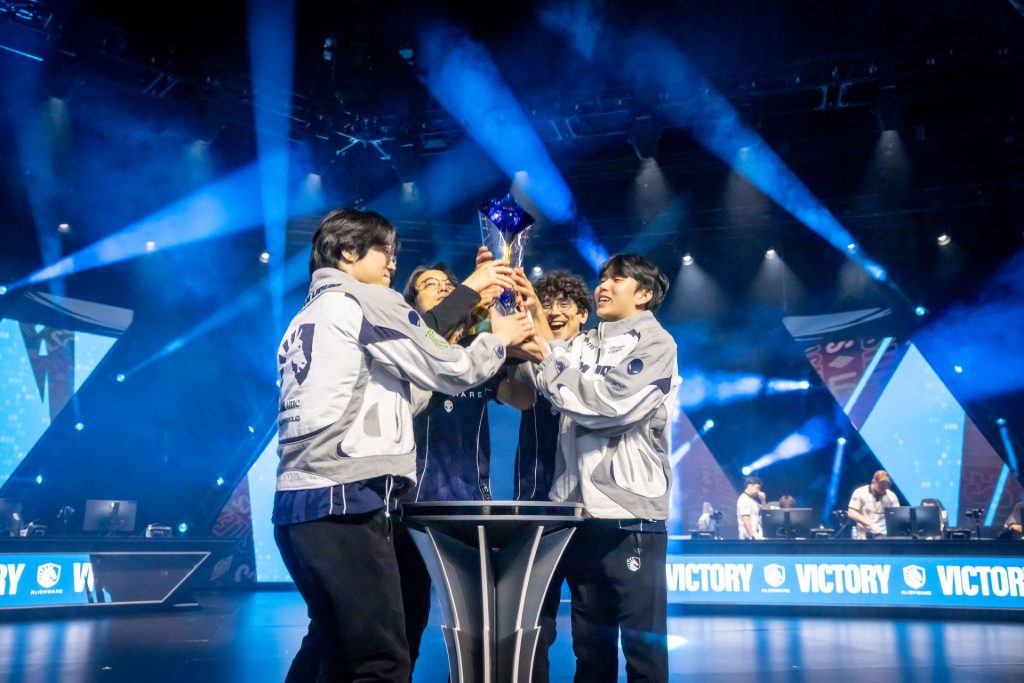
On September 3, 2026, Team Liquid’s World of Warcraft Guild, Liquid Guild on Illidan, won The Venomous Abyss Race to World First by defeating Ula’tek. Lasting over 17 days and utilizing dozens of players, Team Liquid leaned heavily into advanced analytics to ensure they came out on top of the gruelling race, earning the esports org’s fifth consecutive World First.
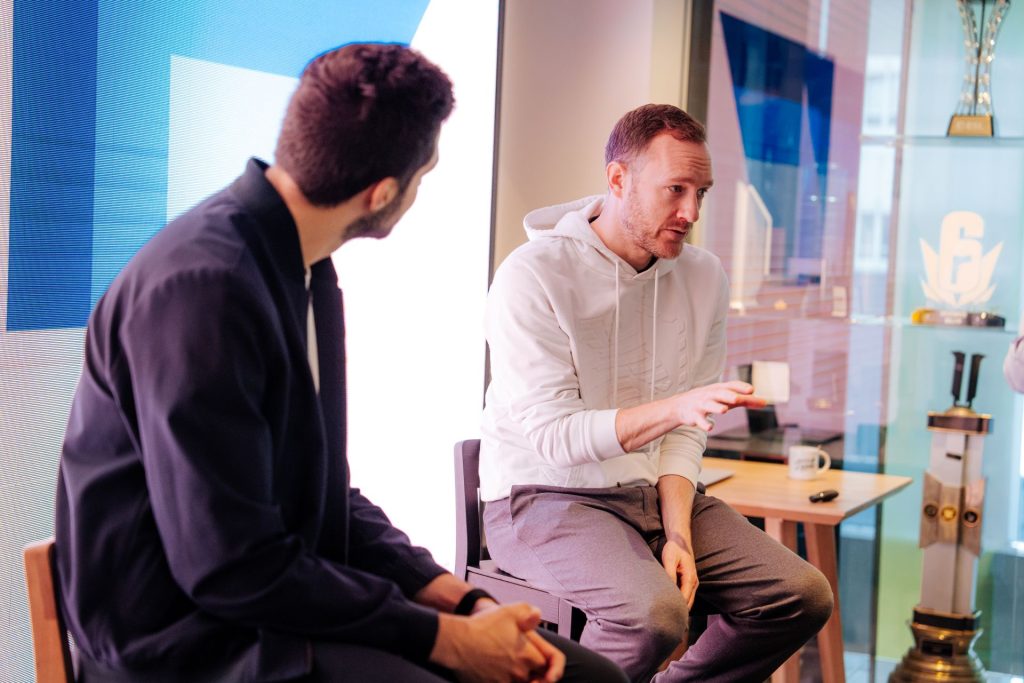
Team Liquid and SAP invited Insider Gaming to Liquid’s Utrecht headquarters to provide insight into how the esports org is working with the data giant to get an edge in esports.
We spoke to Team Liquid Co-Founder and Co-CEO Victor Goossens, and SAP VP, Global Head of Analytics Platform & Engineering Oliver Huth to learn how the two are utilizing emerging technologies to improve Liquid’s competitive offerings.
Applying Data: From Dota 2 Drafting to Race to World First
Partners since 2018, Team Liquid and SAP have begun to move beyond their business partnership and started to look at how SAP’s data capabilities could benefit Liquid’s competitive teams.
Their collaboration led to the complex world of Dota 2 esports. Now featuring 127 heroes, Dota 2’s total possible drafts now number in the tens of quadrillions, so the collaboration started by looking at Dota 2 drafts.
“We started with Dota, and I think once you start, then you optimise,” recalled Huth, “So, you have a first hypothesis, we had a first use case, preparing the draft players and so on… This is how this continuous partnership evolved, and that’s where also, once we started in one area, we first focused on one area, and then went further.”
In 2026, Team Liquid’s Dota 2 team captured BLAST SLAM VI and 1win Essence II before a 5th-6th placed finish in The International 2026, providing some of the most entertaining and off-meta Dota 2 along the way.
Team Liquid is now utilizing SAP databases to help their performance across Dota 2, League of Legends, and World of Warcraft. In the latter, SAP and Liquid collaborated to make history by utilizing their data to continue their Guild’s dominance at the top of the Race to World First events.
But how exactly can SAP’s command of data be used to help a professional esports organization?
Creating a story out of millions of data points
One of the reasons that advanced analytics are possible in esports is that they are… electronic sports. While the exact level of data captured depends on the game, in general, a game with a sufficiently advanced replay/recording system will be able to log exactly the match as it happened. That can also include the player’s actions, movement, ability usage, and so on.
In theory, that is a coach’s dream. A coach can pinpoint the exact moment where a player made a mistake, show it to the player, and correct it.
In Chess, that kind of data-based analysis has led to a revolution in the ability of top Chess players to correct their game and remove ‘blunders,’ but what happens when the game you’re playing has thousands of moves per second, instead of one? That is the challenge of any data-driven review of esports. Once you start recording, the issue is more often than not too much data, instead of too little.
A game of League of Legends, for instance, will have thousands of compounding actions that lead to defeat or success, so where do you start?
So how does Liquid make sense of all of those variables and data points? By combining outcome evaluation with player condition and performance metrics, to reduce those millions of points of data to a narrative.
“It’s different levels of player performance, and they are the leading and the lagging indicators that we’re looking at. So, it goes from, like, the real game results; if we look at the World of Warcraft example, how the raids go, how many kills, and so on. So, let’s say, the outcome KPIs,” Huth explains.
“But then if you look into our voice intelligence technology, then it’s about the collaboration element. So, how effective is the team collaboration? I think then the next level is the whole coaching element, where it’s about understanding how the games went, the last games, and how we prepare for the next one.”
SAP’s AI Voice Intelligence technology allows for the capturing and instant transcription of in-game audio, which can then be added to the overall evaluation model.
How Liquid and SAP used biodata to Win Race to World First
Professional sports have seen a similar data revolution in recent years, driven by advanced analytics and biodata. For professional soccer players, that biodata is often captured by a biometric vest, used to calculate how far a player runs, their heart rate, and so on.
For Team Liquid, that biodata came in the form of Whoop bracelets, voluntarily worn by their WoW raiders, which tracked measurables like heart rate, sleep length/quality, and blood oxygen to create a ‘Readiness Baseline’ used to evaluate a player’s physical ability to perform.
That data is then provided to the coaches who can review the information through SAP’s LLM interface, Joule. Joule will give them a brief summary of that data, allowing for the kind of quick decisions needed when racing for a World First.
“I think the approach is to control the controllables, right?” Huth shared, “So, there are many things that can go differently, and also where the human element of the coach is the key, but that you have the optimal recovery is something that you can control, right?
“You can look into how the players are doing, what preventive measures we take, because it’s clear the players need to perform at their best. And this is where we come in, and we try to optimise this. And then it’s the coaches and the players that, out of the platform that we provide, bring out their best.”
The data allowed the team to strategize player rest and recovery strategies, and in one case allowed the org to start recovery protocol measures on an ill team member two days before the player realized he was unwell.
Team Liquid and SAP hope to lead data revolution, but keep the human element
A fascinating aspect of biometric data in esports is the inversion of the typical professionalisation of these metrics. By the 1990s, sports stars across the world were removing bad habits from their routines, such as fatty foods, alcohol consumption, and bad sleep schedules.
While Team Liquid is advocating for their players to have similar habits, both Team Liquid and SAP recognize that not all esports are ready for orgs to have that level of influence over their athletes, who are still, after all, gamers.
Most gamers prefer to follow how they feel in the moment and work by intuition rather than putting plans in place to perform optimally. Huth’s reply is simple: “I think this kind of gut feeling makes sense if you are an amateur, but if you earn your money with esports, I think it makes sense to go that direction.”
The collaboration is therefore a natural conclusion of the professionalization of esports, which not so long ago was entirely a space for enthusiasts, hoping to beat their friends at a community LAN, but now boasts dozens of million-dollar tournaments, and a fan base of 400 million amongst Gen Z alone.
While certain players are not quite ready to be put on a diet, they may be open to wearing a biometric band, and therefore allowing maximization of performance. In a space where small advantages often prove the most impactful, Liquid is aiming for what can be done, even if it is in the inverse order to traditional sports.
But one thing is sure: while esports may be moving in a more professionalized and data-driven direction, ultimately, regardless of the structures game data can be driven through, it is the human at the end of the line in the form of coaches and players that will be responsible for the interpretation of that data, and decisions taken because of it.
When asked about the next big competitive evolution in esports, Team Liquid co-founder and Co-CEO Victor Goossens told Insider Gaming, “I do see it in a lot of the areas that we went through today. In data, of course, the part of SAP accelerates all of that for Team Liquid quite a lot. But mental health, physical health, I think those are key areas.
“It’s easy to just point at these areas and say, ‘Oh, development will happen, or it will get better.’ The question is actually how. But it will be in mental health, physical health, in psychology, data, AI will help a lot as well in the preparation.
“At the end of the day, those are just tools to support humans. Players still need to click the buttons. So it will still be that innate talent and that innate work ethic from those players that will determine who’s going to win the championships.”
Do you think esports is at the precipice of a data revolution? Share your predictions with us on the Insider Gaming Discord.
See how Liquid beat Anyone’s Legend at Worlds 2026! And for even more Insider Gaming delivered directly to your inbox, sign up for our newsletter.

Darragh is an Esports Journalist for Insider Gaming specialising in Counter-Strike. He loves to explore how esports teams work, or why they very often do not.
More from Darragh Harbinson





Comments