

I grew up with the privilege of playing titles like Jak and Daxter, Ratchet and Clank, and Kingdom Hearts… Countless days (and nights) were spent completely immersed and in awe of incredibly fun, vibrant worlds wrapped in that familiar, timeless fable-like charm. That passion has stayed with me to this day, and the platformer genre remains my absolute favorite.
Years passed, and I stumbled upon an exciting trailer for Duskfade, a brand-new project from Weird Beluga—the studio responsible for another game that I adore, Clid the Snail. The game’s marketing pitched it as a “love letter to classic 3D action-platformers.”
At first, I thought the marketing was a bit pretentious; after all, it’s been quite a few years since a game in this genre has accurately captured the magic and, above all, the quality of those bygone titles. But thankfully, I got to play Duskfade early and experience firsthand that the game delivers precisely what it promises!
In this comprehensive review of Duskfade, I will cover all the points that lead me to consider this project one of the finest examples of the genre since the launch of Ratchet and Clank: Rift Apart. I need to drop a quick disclaimer right off the bat: I’m not really factoring in Astro Bot here, because it leans much more toward collection than actual action and combat. It’s as if Team Asobi’s project belongs to an entirely different subgenre.
An Impactful Story Hidden Behind a “Kids’ Game”
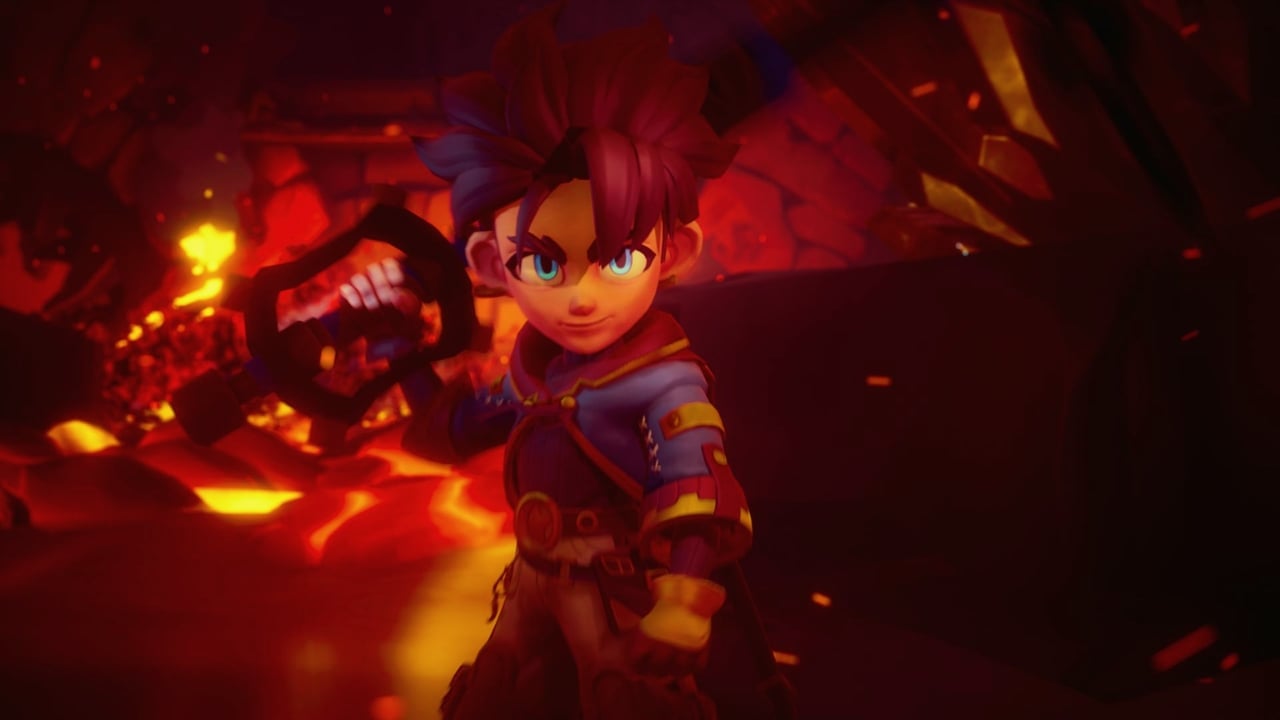
At first glance, you’d easily believe Duskfade is just another title aimed strictly at children. The narrative is filled with lighthearted banter and playful moments between Zirian and Allira. The two siblings end up separated by an unprecedented event that thrusts Zirian onto a journey of self-discovery and, most importantly, personal growth.
Despite its childish facade, the story tackles complex, everyday themes. What Weird Beluga achieves with the plot is fantastic. Some of these themes are quite heavy; however, mindful of its younger target audience, it handles these subjects with immense care without ever underestimating the player’s intelligence.
It’s common for action-platformers to feature simplistic stories lacking real impact or leaning heavily into pure fantasy. Still, the strong parallels with the real world give Duskfade an extra (and most welcome) layer of charm. Another high point is the sibling dynamic and character development.
The Zirian we meet and control at the start of the adventure is a completely different person by the time the credits roll. Very few games manage to deliver such a well-executed sense of character evolution, at least narratively speaking. For a moment, I found myself reflecting on my own journey of growing up and the transition from youth to adulthood. It was a massive surprise to see a platformer pull off this feat.
The traditional hero’s journey is present here, but wrapped in a visual and audio aesthetic reminiscent of a fairy tale, which, in my view, fits the game’s premise like a glove. It feels as though we’re playing through an illustrated storybook for 8-to-12-year-olds—though, I must stress, the studio transitions effortlessly between silly humor and genuinely serious moments.
An Impressive Feat for an “Indie” Team
According to the studio’s LinkedIn page, they have between 2 and 10 employees, making them a very lean team. What they pull off in Duskfade is simply staggering for a crew of this size. Variety is the name of the game here. Over the course of the roughly 9 to 10 hours it takes to beat it, we are constantly introduced to new enemies, mechanics, and abilities—spanning both combat and traversal.
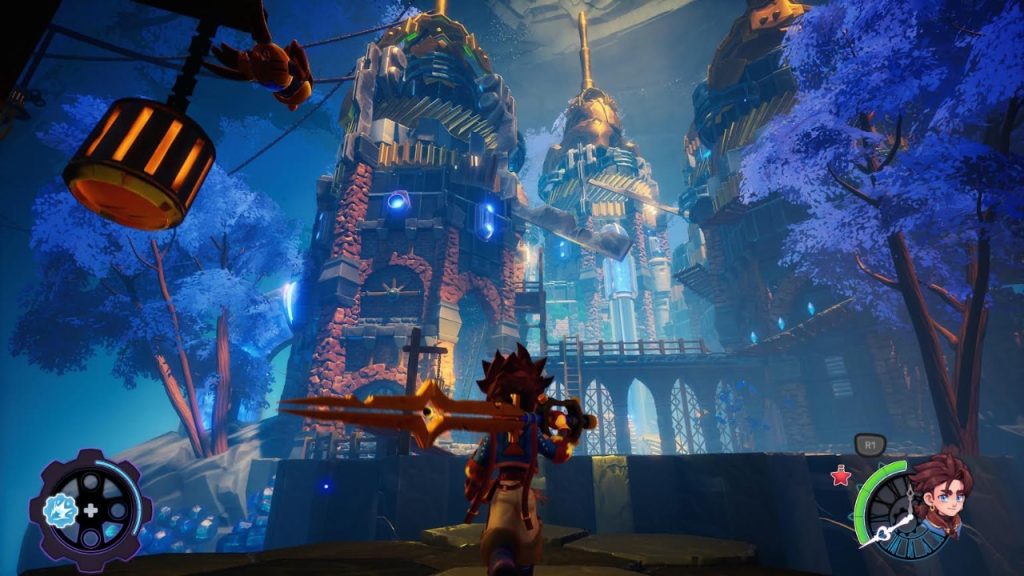
The secret to this success is that Weird Beluga doesn’t try to reinvent the wheel. The traversal abilities, for instance, are staples of the genre. We have wings for gliding, a grappling-hook-style device to reach higher ledges, and a shield that lets us grind on rails… Elements we’ve seen in other games, but carefully implemented into Duskfade’s clockpunk universe. Aside from these mechanics, which are introduced at an exceptional pace, we get a generous variety of enemy types, ingenious level design that reinvents itself with every map, vibrant and varied biomes, and, of course, brilliantly crafted boss fights.
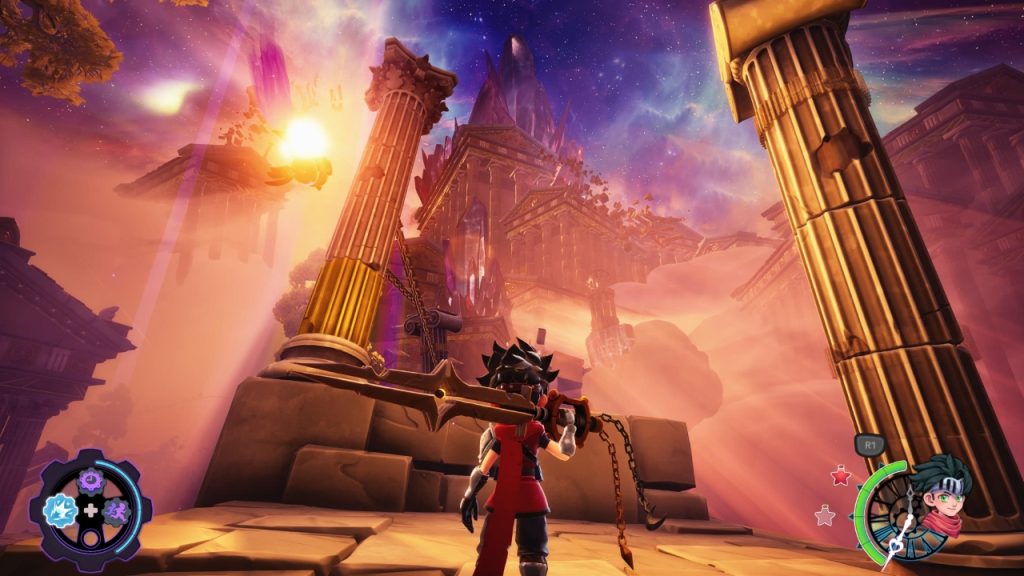
The team clearly spent hours meticulously designing the game’s mechanics. The proof is how seamlessly they are integrated into the primary boss battles. Did you unlock the gliding wings? Get ready to use that ability constantly during the area’s main boss encounter.
The level design is brilliant for the most part, encouraging the combined use of these abilities and general movement to reach hidden chests and progress. For example, in the very first map, I spotted a chest that clearly required a skill I hadn’t unlocked yet. However, thanks to the precise gameplay and high mobility, I managed to pull off a mid-air chain of attacks that slightly boosted my vertical reach, allowing me to open the chest even though I technically shouldn’t have been able to yet at that point.
I often say that a great platformer requires surgically precise controls, and thankfully, Duskfade delivers that. Jumping, dashing, dodging, and gliding feel genuinely fun and satisfying, and the inputs are ultra-responsive. I was pleasantly surprised by the natural challenge found in some platforming sections—a testament to the developers’ genuine desire to pay homage to classic games.
We get platforming segments that are challenging in all the right ways, and boss fights that made me sweat even on normal difficulty. Speaking of combat, that happens to be one of the only two flaws I found in Duskfade. The game allows you to use a sword for light attacks and a pendulum for heavy strikes. Additionally, we have active skills like a landmine, a shotgun-like blast, an explosive protective barrier, and a spell that summons homing missiles.
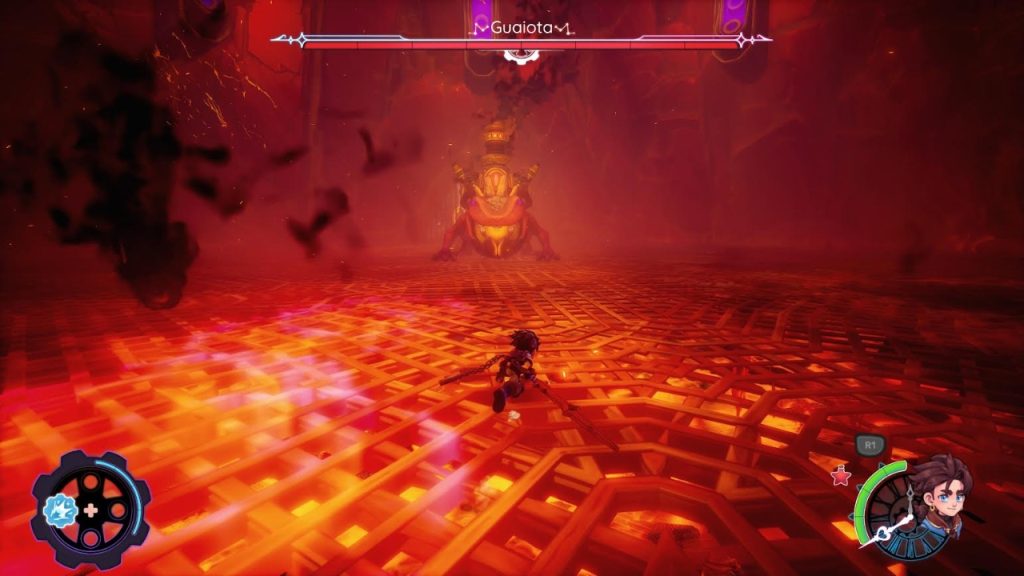
Despite this apparent variety, the combat grows repetitive after just a few hours due to the lack of combo variety for the sword attacks—which you’ll use most of the time. The game needed more primary weapon options to shake off that repetitive feeling or the ability to execute more complex combos.
A Tiring Collectathon
Now that I’ve covered one of my two main concerns with Duskfade, it’s time to address the second. In platforming games, hunting down collectibles is a fundamental part of the experience. In Zirian’s adventure, these collectibles tie in nicely with the game’s themes. We can collect ingots that change the appearance of our primary sword.
We can rescue felines that, once returned, unlock new character skins, and—one of my personal favorites—coins. These coins are used to buy stickers and trading cards to complete an in-game album. In short, these activities are quite fun; however, what isn’t fun is the heavy backtracking required to mop them all up.
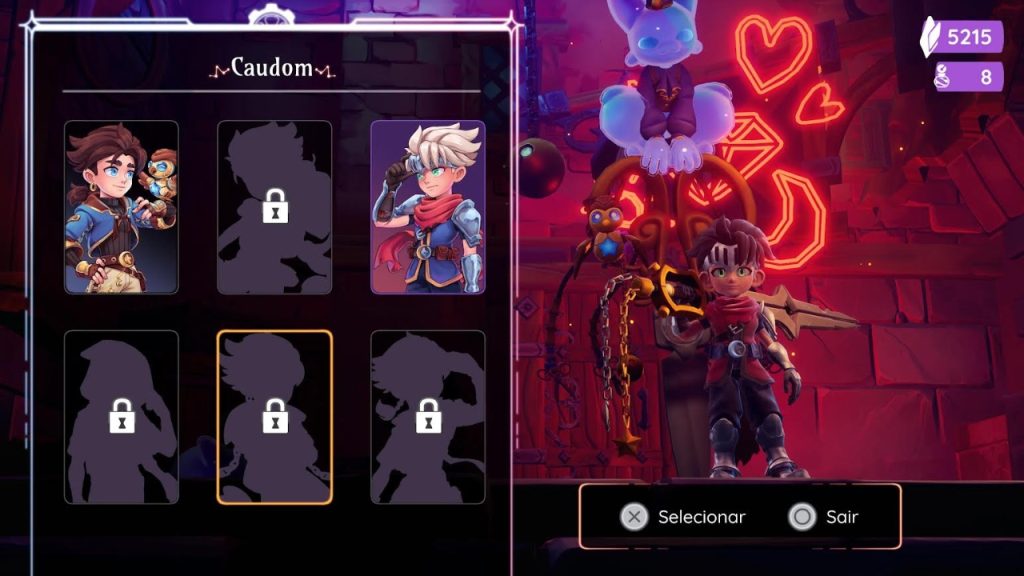
The game lacks a tracking sensor or a map, forcing players to practically re-explore map by map if they want to hit 100%. If you’re a player like me who lacks exceptional spatial memory, the collectible hunt quickly becomes a grueling chore. This issue is compounded by the fact that you often can’t grab these items on your first visit to a map, as they almost always require abilities unlocked much later in the story.
To soften the blow, the team added a late-game ability allowing players to fast-travel back to the nearest checkpoint. Still, by itself, that’s not quite enough to turn collectible hunting into an enjoyable pastime.
Duskfade Review Verdict
If you miss games like Ratchet and Clank, Sly Cooper, and Jak and Daxter, I’d go as far as to say Duskfade is practically a must-play. Featuring a surprisingly deep narrative, weighty combat, hyper-responsive controls, well-balanced difficulty, and a healthy dose of unpretentious fun, it’s an absolute treat for anyone looking for a passion project made with soul.
Let us know on the Insider Gaming Discord server if you’re going to play Duskfade.
For more Insider Gaming coverage, check out our review of Beast of Reincarnation, and don’t forget to sign up for our weekly newsletter.
Duskfade
 9
9
Duskfade

Ruan está cobrindo a indústria dos games desde 2017, trazendo várias informações sob a ótica do mercado e reviews após o 100%. Quando ele não está escrevendo, está jogando algum…
More from Ruan Almeida