


When I first saw Silent Hill: Townfall at Summer Game Fest back in June, I immediately knew it was a game I wanted to experience for myself. I’ve always had something of a love-hate relationship with horror games. I hate being terrified, but I love the reward that comes from pushing through that fear, uncovering a mystery, and finally solving something that may have been staring me in the face for what feels like an eternity.
Silent Hill: Townfall understands that relationship remarkably well.
St. Amelia is a place filled with darkness, despair, and the remnants of a community that once appeared to thrive. It’s creepy without constantly relying on cheap scares, demanding without turning itself into an action game, and often at its best when it forces you to slow down, observe your surroundings, and figure out what happened here.
Unfortunately, some frustrating puzzle design and several technical problems occasionally disrupt what is otherwise a compelling trip into the fog.
A Town Lost In Time
One of Townfall’s greatest strengths is St. Amelia itself. The small Scottish island town feels like somewhere that once had life flowing through it. Businesses line its main roads while homes sit tucked away on quieter side streets, giving the area the feeling of a tight-knit community that has been abandoned after something went terribly wrong.
You’ll find reminders that people lived here, worked here, and tried to carry on even as tragedy began consuming the town. Memorials, scattered notes, abandoned businesses, and signs that residents attempted to fight back all help paint the picture without constantly stopping the game to explain itself.
The mid-1990s setting adds another layer to that identity. Emails, posters, notes, CRT televisions, pagers, phone booths, CD towers, and other pieces of technology firmly establish the era.
As someone who came of age during that period, there is a sense of nostalgia attached to it. It was a more analog, less connected time, and Townfall uses that absence of modern technology to its advantage. There is no smartphone to guide you, no GPS constantly pointing toward your next destination, and no easy way to instantly communicate with anyone. That isolation matters.
St. Amelia is semi-open, allowing you to explore many areas freely, but story progression is still tied to specific objectives. Navigation can occasionally become confusing, especially when darkness and thick fog obscure your surroundings, making the map one of the most important tools you have.
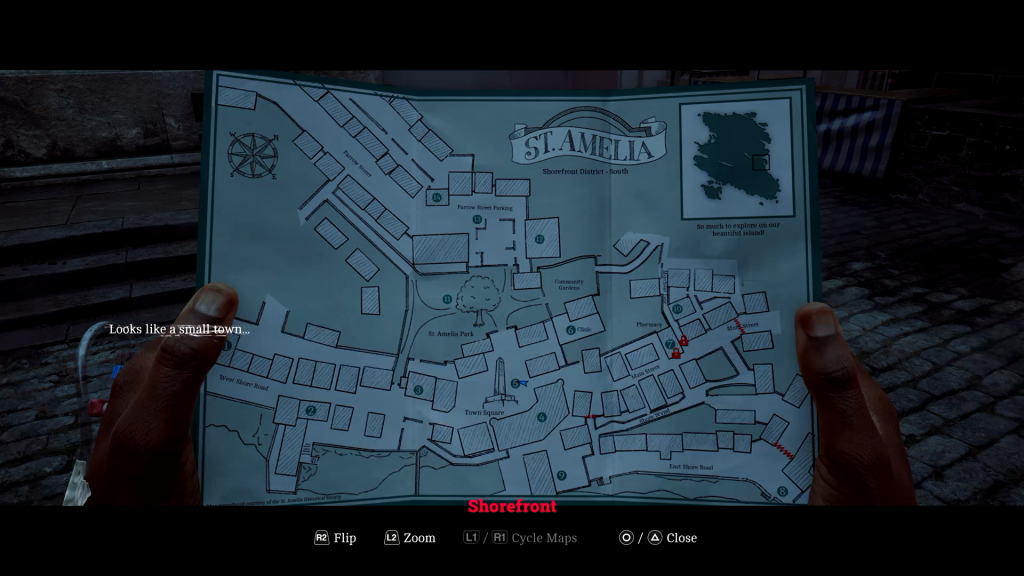
There are moments when the fog becomes so dense in fact that you cannot see what is waiting just a few feet in front of you. Other areas plunge you into dark corridors where your flashlight becomes essential. And yet, sometimes the most unsettling thing about St. Amelia isn’t what you can see. It’s what you can hear. Or, more specifically, what you can’t.
The Sound of Something Watching You
If there is one area where Silent Hill: Townfall truly excels, it is sound design. Playing on my Pulse 3D headset, there were multiple occasions where I legitimately had to stop and determine whether the sound I had just heard came from the game or somewhere inside my house.
That is exactly what great horror audio should accomplish. The world is filled with subtle noises. Wood creaks inside abandoned buildings. Wind blows through deserted streets. Waves break against the island. Objects shift somewhere in the distance. Because St. Amelia is otherwise so quiet, every little sound suddenly feels important. The silence itself becomes part of the horror.
Music is used effectively as well. Low horror undertones establish tension even before anything has happened, while encounters become much more intense as the soundtrack reacts to nearby danger. Directional audio also makes a meaningful difference. With headphones, it is possible to get a general idea of where a threat is coming from, forcing you to listen just as carefully as you look. Enemies can hear you as well, so sound becomes more than presentation. It becomes part of survival.
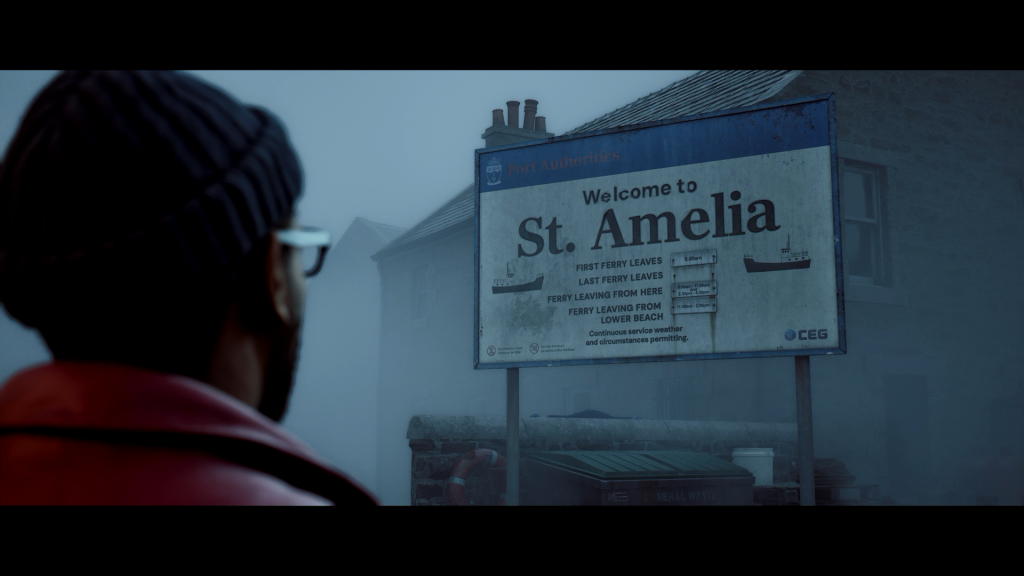
Townfall isn’t the scariest game I’ve ever played, and it doesn’t overwhelm players with constant jump scares. Those moments are used relatively sparingly. But instead, the game creates something nearly just as bad: anxiety. You hear something and you know something is nearby. But you just don’t always know exactly where it is. And suddenly every door, hallway, and patch of fog becomes suspicious.
Tune In, Stay Alive
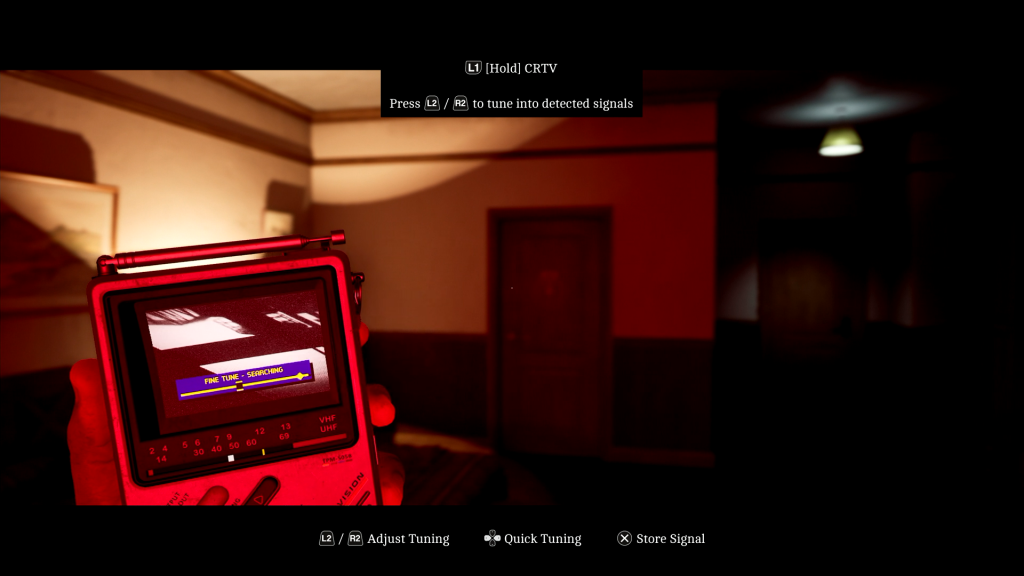
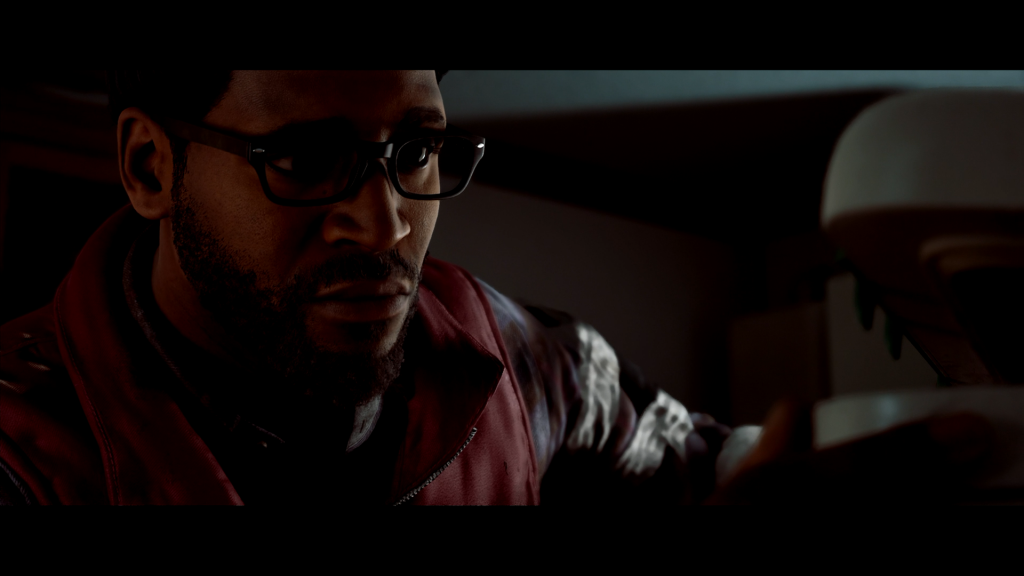
Another area where Townfall separates itself is through the devices used by its characters. Simon Ordell carries a small handheld CRT television that serves several purposes throughout the game. It can help locate threats, reveal video messages, and guide Simon toward information he needs to continue his investigation.
The television can be pulled out at any time, and its implementation with the DualSense is one of the game’s more creative ideas. During certain sequences, you physically rotate and move the controller while attempting to line up a signal, using the analog sticks and buttons to lock onto the correct frequency. Broadcast-style color bars and static eventually begin forming a usable image or message. It’s a small idea that goes a long way toward making the device feel like something you’re actually operating rather than simply watching. It also gives Townfall a clever way of breaking the fourth wall without becoming gimmicky.
Simon’s television reacts differently depending on what you are searching for. Static can indicate nearby danger, while other frequencies may reveal information needed to solve a puzzle.
Later, when the story shifts perspective to Zoe Ellis, the CRT is replaced by a pager. The basic purpose remains similar, but the execution changes. Instead of watching a screen, vibrations warn Zoe that something may be nearby and help direct her toward objectives with important messages.
Both devices fit the characters well while still serving the same larger purpose: keeping you aware of a world that constantly feels like it is hiding something from you, and keeping you safe from what lurks in the shadows.
Simon and Zoe’s thoughts are also displayed to the user in the upper left corner to help guide you and in most instances tell you what they are thinking in the current situation they are in. These don’t happen often but they’re a nice touch to help bring you into the world even more.
Run, Hide, Or Fight
That awareness becomes essential because the creatures roaming St. Amelia aren’t mindless targets waiting to be shot. You have to pay attention to them. Enemies follow patrol patterns. Some have an axe for a head, while others incorporate medical tools into their attacks in genuinely disturbing ways. One particular enemy uses what resembles an IV needle as part of its attack, ejecting it outward from its body in horrifying fashion.
The safest option is often patience. Watch where an enemy walks. Wait until it turns away. Move quietly. And don’t assume that running into a room automatically means you’re safe.
I learned that one the hard way.
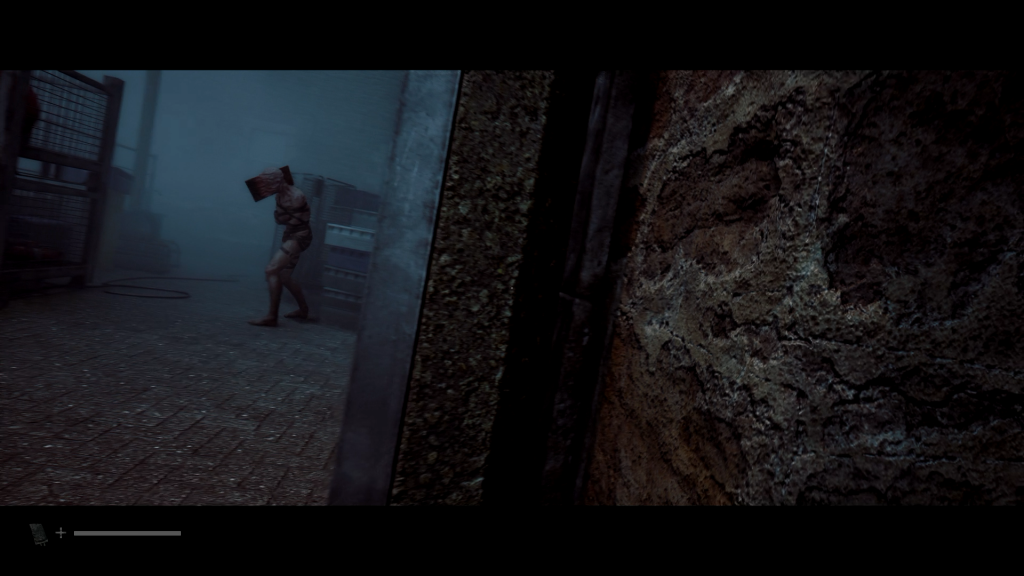
If an enemy sees where you hide, it may simply follow you inside. It’s an experience that was absolutely terrifying. Now doors with locks can protect you, but watching something on the other side attempt to force its way in creates exactly the type of horror-movie tension you would expect.
Combat exists, but Townfall clearly doesn’t want you treating every encounter like a traditional shooter. Melee weapons such as wooden planks deteriorate over time. You can swing and block, but combat is intentionally clumsy enough to constantly remind you that your character is vulnerable. Later, I obtained a revolver, and suddenly having a firearm felt incredibly powerful. A well-placed shot can end an encounter quickly. The problem however, is ammunition. You might only have a handful of rounds available, making every trigger pull a decision. Fire when multiple enemies are nearby and that noise can create an even larger problem. This isn’t a game where you unload a magazine and grab another one five seconds later. Sometimes fighting is necessary. Other times bottles can be thrown to create distractions or briefly stun an enemy, allowing you to slip past.
Zoe changes the equation even further. She is much less equipped to directly confront enemies than Simon, so her sections place an even greater emphasis on distractions, timing, and waiting for an opportunity to move. The shift helps keep the gameplay from becoming repetitive while reinforcing the idea that survival isn’t always about killing whatever stands in front of you.
The Reward (and Frustration) Of Figuring It Out
Puzzles are where my relationship with Townfall became considerably more complicated. When they work, they are incredibly satisfying. One of my favorite puzzles took place inside a pharmacy and required using Simon’s CRT to uncover hidden information that eventually allowed me to open a locker. The game gave me clues, I had to interpret them, and eventually everything clicked. That moment where you suddenly realize, “Oh, THAT’S what it wants me to do,” is one of the most satisfying things about Townfall.
The problem is that the same design philosophy can occasionally become exhausting.
Some puzzles require environmental observation. Others involve codes, item combinations, hidden clues, or manipulating objects in ways that aren’t immediately obvious. That isn’t inherently a problem. In fact, the investigative nature of the game is one of the reasons I enjoyed it. The game invites you to investigate and look around and tends to reward you in some circumstances.
But there were times where I had everything necessary to progress and still spent an hour trying to determine how the game expected me to use it. One sequence involving an X-ray machine became particularly frustrating. I had correctly identified what needed to be done, but I was interpreting the orientation of the equipment incorrectly. I was approaching it from what appeared to be a landscape perspective when the puzzle effectively required me to think about its positioning vertically. Once I understood it, the solution made sense. Getting to that understanding was another story. That distinction matters. There is a difference between a difficult puzzle and a poorly communicated one. Townfall occasionally crosses that line.
For players who love investigating environments, examining clues, and thinking critically about how different pieces connect, there is plenty here to appreciate. For players with little patience for that process, some sections could become frustrating very quickly.
There are also stretches where solving something is followed by moving through an area, hiding from enemies, finding another clue, and repeating the process. Over time, the combination can become mentally exhausting. I enjoyed solving these mysteries. I was also ready for a break after some of them.
Simon, Zoe, And The Mystery Of St. Amelia
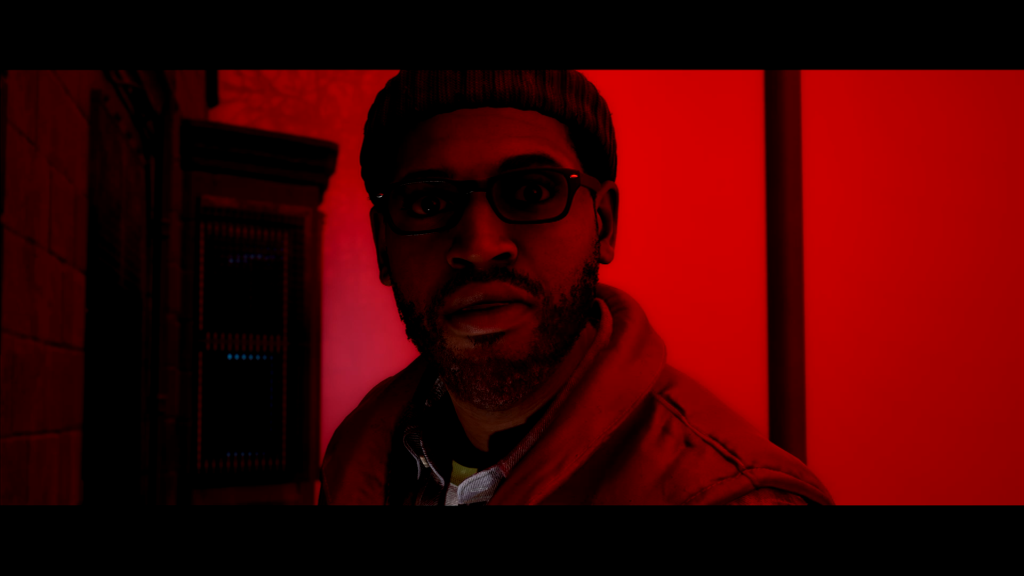
At the center of everything is Simon Ordell. Simon is empathetic, sympathetic, and clearly cares about what happened to those around him. Throughout the game, he follows a trail of clues left behind by Zoe Ellis in an attempt to understand what she was trying to show him.
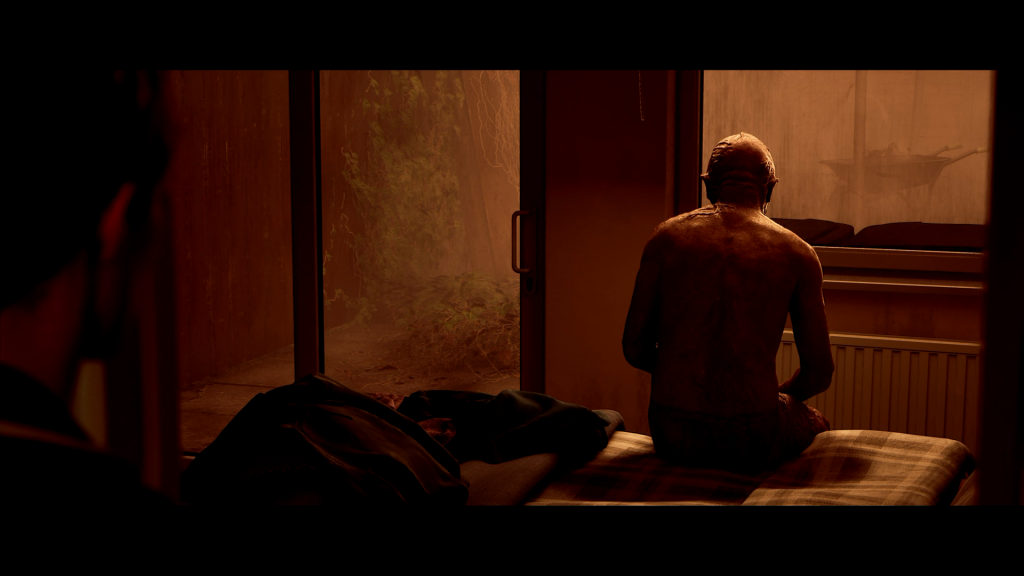
The mystery surrounding Zoe became more interesting to me than Simon himself. That isn’t necessarily a criticism of Simon. It speaks more to how effectively Townfall creates questions around Zoe. When you eventually play as her, the story gains another layer. Zoe carries tremendous guilt and blames herself for many of the events surrounding her. Watching how other people treat her only makes that weight more difficult to ignore. There is sadness surrounding her character. The performances help sell it. Voice acting throughout the game is strong, and conversations generally feel believable rather than exaggerated for the sake of horror.
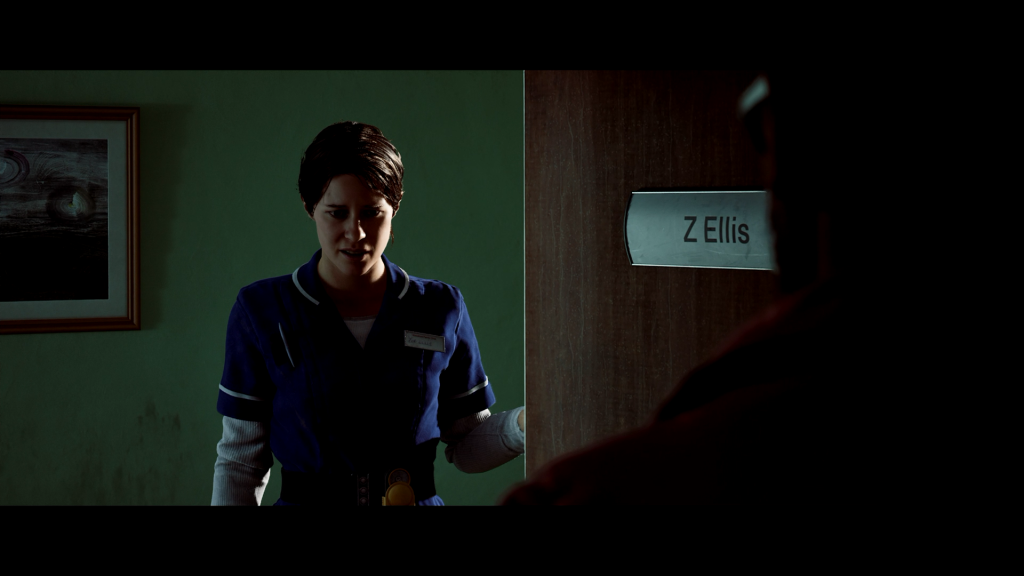
Answers arrive at a satisfying pace, although Townfall remains intentionally cryptic. The game gives you enough information to keep moving forward while still leaving you wondering exactly how everything fits together. That balance kept me invested. I wanted to know what Zoe was trying to tell Simon. I wanted to understand what happened to St. Amelia. And even during sections where puzzle fatigue started setting in, that mystery kept pulling me forward.
A Signal That Sometimes Drops
Unfortunately, Townfall has technical problems that are difficult to ignore. During my time with the pre-release PS5 build, the game crashed twice. Both crashes appeared random.
I also encountered a separate progression issue early in the game after reaching St. Amelia’s town square. Whatever event was supposed to occur simply did not trigger, preventing me from moving forward until I reloaded an earlier save. Once I restarted, everything worked correctly.
I also noticed one stretch where performance became noticeably choppier than normal. For context, I played using the game’s Performance mode, and most of the experience was otherwise smooth. Loading times are also pleasantly quick.
Thankfully, neither crash caused me to lose a significant amount of progress. The game also includes manual saving in a wonderfully thematic way. Phone booths placed throughout St. Amelia allow Simon to save by dialing 100, a mechanic explained early in the game. Additional save locations appear at desks and other logical points throughout the environment.
Phone booths are positioned frequently enough that saving rarely feels inconvenient, but autosaves aren’t so generous that I would recommend walking past one. So if you see a phone? Make the call. It’s a small mechanic, but one that fits the period and atmosphere perfectly.
A launch update could potentially address the crashes and progression issue I encountered. At the same time, a review has to reflect the game that was actually played, and those problems absolutely affected my experience.
They are also the biggest reason Townfall never quite reaches the next level for me.
Silent Hill: Townfall Verdict
Silent Hill: Townfall is at its best when everything comes together. You’re walking through the fog with headphones on. A faint sound comes from somewhere behind you. The CRT begins reacting. You discover a clue that initially makes no sense. Twenty minutes later, something clicks. Suddenly a puzzle you’ve been staring at finally makes sense, and that frustration turns into genuine gratification. Those moments are what make Townfall work.
The sound design is excellent. St. Amelia is atmospheric and believable. Simon and Zoe provide two different perspectives on the same mystery, and their differing abilities help keep gameplay fresh. The use of analog technology gives the game an identity of its own, while the combination of stealth, exploration, investigation, and limited combat constantly reminds you that survival requires more than simply pulling a trigger. But there is another side to that experience.
Some puzzles drag on longer than they should. Certain solutions aren’t communicated clearly enough. Hunting and gathering can get exhausting when you’re trying to maze your way through monsters. Limited resources occasionally create frustration rather than tension, and the crashes and progression issue I encountered are significant blemishes.
Townfall also gives players reason to return to St. Amelia after the credits roll, with five possible endings in total. Three of which can be reached during an initial playthrough, while two additional endings are tied to New Game+ following completion, adding an extra incentive for those who want to uncover everything St. Amelia has to offer.
Townfall is a very good horror game. It just never quite becomes a great one for me. Players who enjoy investigating environments, solving difficult puzzles, and slowly uncovering a mystery will likely find a lot to appreciate here.
Those who quickly become frustrated when a solution isn’t immediately apparent may find the experience considerably more exhausting.
As someone who is admittedly a bit of a scaredy-cat with horror games, Townfall managed to freak me out without making me want to stop playing. More importantly, it kept me curious enough that I constantly wanted to know what was waiting around the next corner.
Even if part of me was terrified to find out.
Silent Hill: Townfall releases on September 24th on PlayStation 5 and PC. Will you visit the town of St. Amelia in Silent Hill: Townfall? Let us know in the comments below!
Silent Hill: Townfall
 7
7
Silent Hill: Townfall

"A2TheP" Albert Perkins is a writer and the host for Insider Gaming's Insider Today daily news round-up. Albert has been in the video game industry for the better part of…
More from Albert Perkins