


Last week, I was lucky enough to attend my first Tokyo Game Show, proudly flying the Insider Gaming banner and soaking up all that the legendary metropolis had to offer. I went in with a fairly open mind, but from the moment I hit the show floor at the Makuhari Messe, I knew that I was in for a treat.
And by ‘treat’, I mean a cacophony of neon, thronging crowds, dizzying spectacles, and unadulterated temptations of the flesh. I’ve done the ‘Western’ gaming expo circuit umpteen times, but nothing could have prepared me for the sheer insanity and incredible experience that awaited me at the Tokyo Game Show.
This is Inside Tokyo Game Show, and it’s the cold, hard facts you might need to know.
Tokyo Game Show is Busy… Like, Too Busy
Let’s open the floor with the biggest gripe about the Tokyo Game Show. It’s not even my main gripe, but from a cursory examination of the community sentiment, it’s certainly the boldest bugbear that folks have in general.
Tokyo Game Show is overwhelmingly busy. I’m talking about people pulling all-nighters to get to the front of the queue, kind of busy. I’m talking about a concourse that does not move because there are too many people jammed in there most of the day. And I’m talking about 55,000 visitors on business days that push queues for single games beyond an hour.
Case in point, even on the more exclusive business days, certain ‘attractions’ like a Grand Theft Auto 6 experience managed to sell out of timed tickets within ten minutes of the event opening.
On business days.
But on the public days, that’s really when things were turned up to 11. I boarded my train at Maihama Station and was immediately sandwiched in amongst hundreds of otakus all desperate to experience the event at the Makuhari Messe. The queuing was a nightmare, despite the staff’s best attempts to corral thousands upon thousands of visitors, and as soon as the floodgates opened, people were sprinting to get to the most interesting games as quickly as possible.
Despite multiple warnings not to run in the venue, of course.
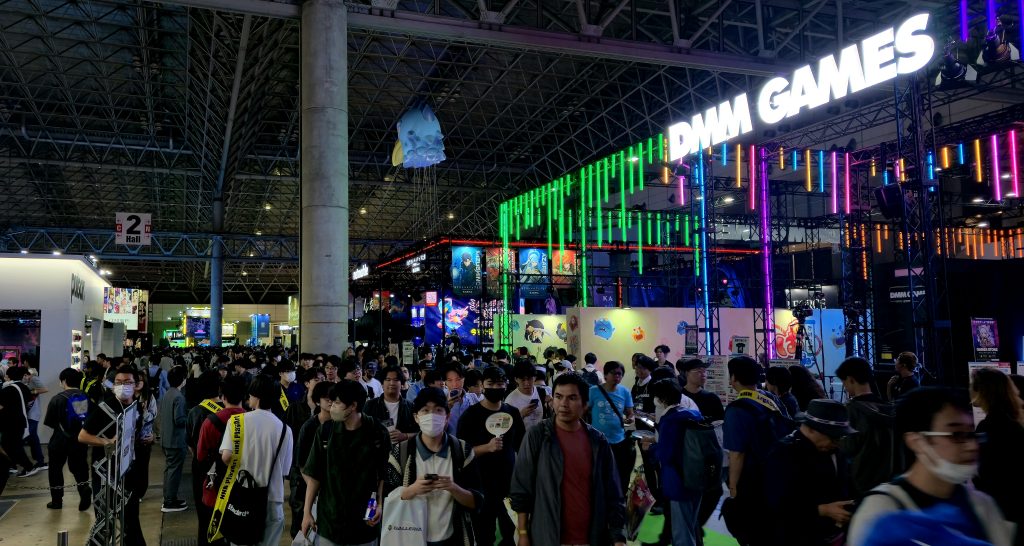
It was so packed in the event hall that you couldn’t really navigate to what you wanted. You had to ride the crowd, which was kept moving by marshals with glowsticks, and hope that the ocean of bodies would churn you out near something entertaining.
That does unfortunately mean that you’re almost guaranteed to miss a lot of games, especially the bigger, more ambitious titles. And, the games that you can get to, you might need to queue for anything up to two hours – and the event isn’t open all that late.
I even heard about exhibitors and other event staff securing timed tickets for some games before other visitors even accessed the show, which was a bit dishonest and disappointing.
Don’t get me wrong, it’s one hell of an experience. The passion is front and centre, and at all times, you know that the people around you live and breathe video games. That’s why these shows are popping off more these days; it’s because of the sheer love that the visitors have for what’s on display.
That’s one of my richest takeaways from the Tokyo Game Show. Those attending the event were authentically interested. They engaged with people running the booths, they read materials handed to them, they took pictures and videos of everything, and they hopped from bay to bay to check out as much as possible.
No Room For Anxiety
If you’re not a fan of crowds, loud noises, or people getting in your face, then you might want to avoid Tokyo Game Show. That should be obvious, given the fact that a quarter of a million people tend to visit over three or four days, and the Makuhari Messe isn’t that big.
But it’s a world away from Western gaming conventions.
Almost every major booth has a strong idol presence, with costumed women gyrating lasciviously and handing out stacks of leaflets, tote bags, and other knick-knacks, all with the hope of enticing users into whatever experience they’re promoting.
This was something I had not anticipated. I knew about the general pull of attractive females in the anime and JP gaming space; that’s hardly a big secret. But what I didn’t expect was young women who were at times wearing very little, parading around and being applauded for doing so.
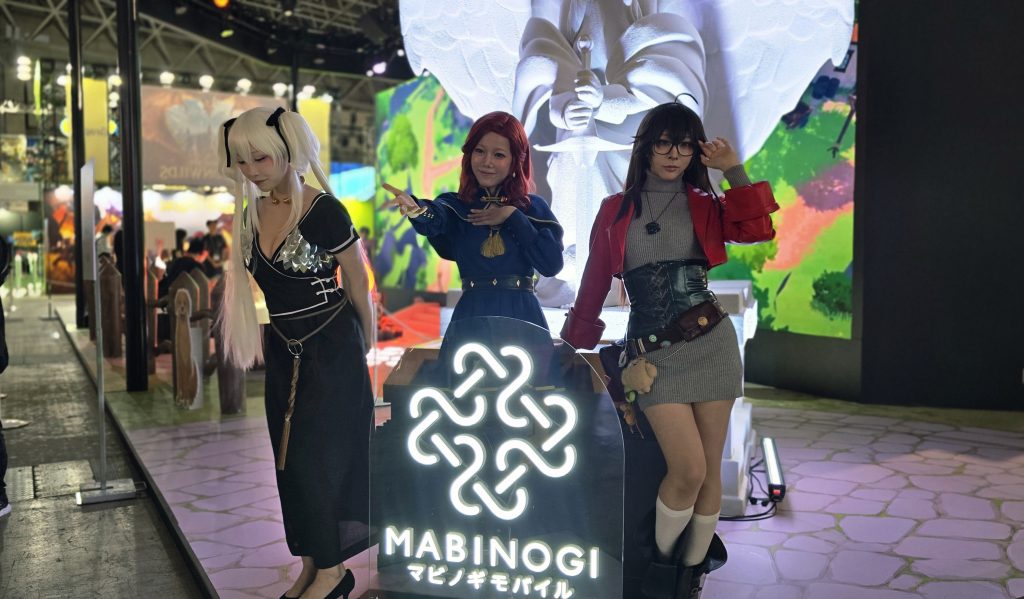
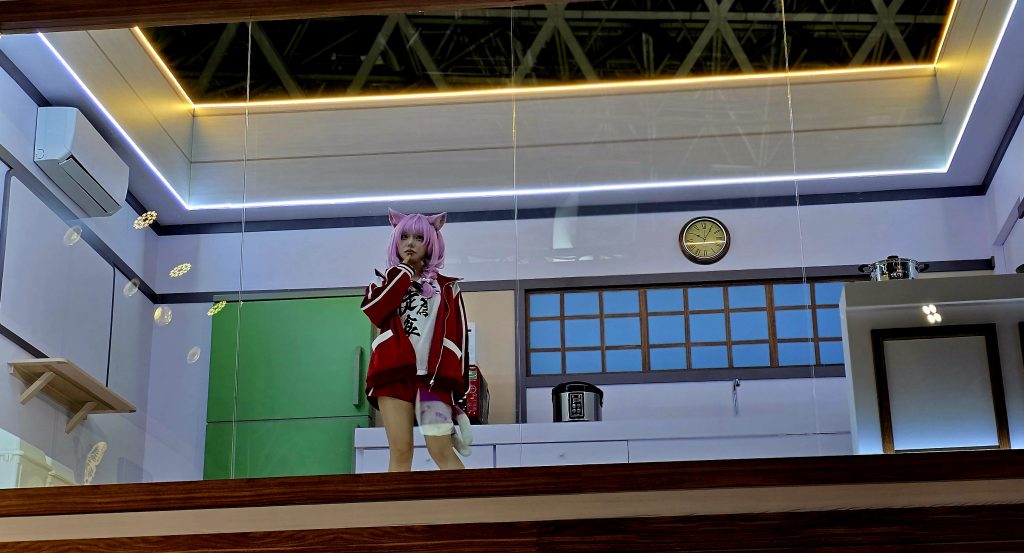
I saw in some social circles claims that it was an anti-censorship movement, with these cosplayers and models offering themselves up to the Tokyo Game Show’s most prominent exhibitors in a bid to draw more attention to their booths. How they did that was by dressing in extravagant, revealing outfits and laying on a little ‘fan service’ for visitors, which I saw lapped up at every opportunity.
Again, it’s one heck of an experience. You just don’t get that in the United States or Europe, for example. I couldn’t say that I walked around Gamescom in Germany in August and came face-to-face with a gaggle of girls using a bit of skin to finagle visitors into their attractions.
Not a bad thing by any means, as I’m all for the empowerment aspect; I just really didn’t expect it.
That, along with the immense audio palette on offer, the endless streams of paper material being thrust into your hands, and the million screens and flashing lights encircling you at all times, means that this is not an event for those with anxiety or an aversion to anything remotely social.
Also, and this might seem unfair to mention, given the locale, not everything was translated. I played one relatively sizeable game that had a lot of attention, but the entire thing, from the menus to the dialogue, was only available in Japanese. For an event that garners attention from international media, that felt like a major oversight.
I will stress that, at all times, I felt respected and never suffocated. There was nothing wrong with ignoring folks trying to market their product to you, and I never felt pushed or pulled into trying something.
But When It’s Good, It’s Great
I was at the Tokyo Game Show for three days – two business days and one public day. And I can’t say that, for any of my time spent there, I had a negative experience. I was in my element, marching around the show floor (as fast as the crowds permitted) and picking out a thousand and one things to do.
I demoed some incredible games:
- Fareidolia
- Astrae Oratio
- STRANGER THAN HEAVEN
- PIO: A Robot’s Story
- INTERSCAPE
- ATOM RPG 2
- Un:Me
- Hello Sunshine
And that’s just the games that had me the most excited. Truthfully, there are hundreds of games to experience, from single-dev indie titles to the most renowned AAA games on the market, or coming soon.
These games are all backed by on-site developers, sometimes even the highest echelons of the company bringing them to life. For instance, Stellar Blade had a booth there, offering fans the chance to try out the Nintendo Switch 2 version of the game, and at one point, Kim Hyung-tae, the CEO of Shift Up, was taking pictures with fans.
There’s a monumental indie presence at the Tokyo Game Show, with 80 games being curated and showcased for all to experience, slimmed down from thousands of applicants and representing the best of the best.
You’ve got VR and AR games, mobile experiences, innovative solutions that use bizarre technology, arcade games, lightgun games, and so much more. It’s a veritable feast of gaming goodies, that’s for damn sure.
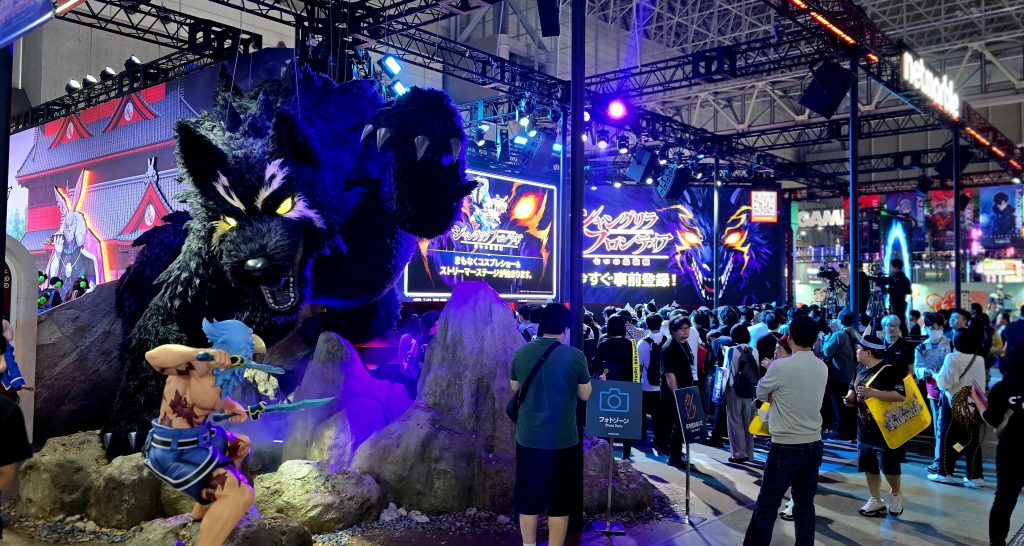
In terms of scope and scale, some of these booths easily rivaled Gamescom, the largest gaming expo in the world. I had my hair blown back by some of the displays, and the more interactive experiences were a genuine delight.
For instance, Un:Me had me walk through a replica of an in-game corridor, haunted by a terrifying nurse-like figure who chased me out of the room.
There’s swag everywhere, vendors like Red Bull are simply begging for you to take free stuff, the idol scene runs rampant and draws unparalleled attention, and you can just bump into all kinds of folks just wandering around the floor. I ran into the one and only Geoff Keighley and caught up with him for a minute right outside the Netmarble booth.
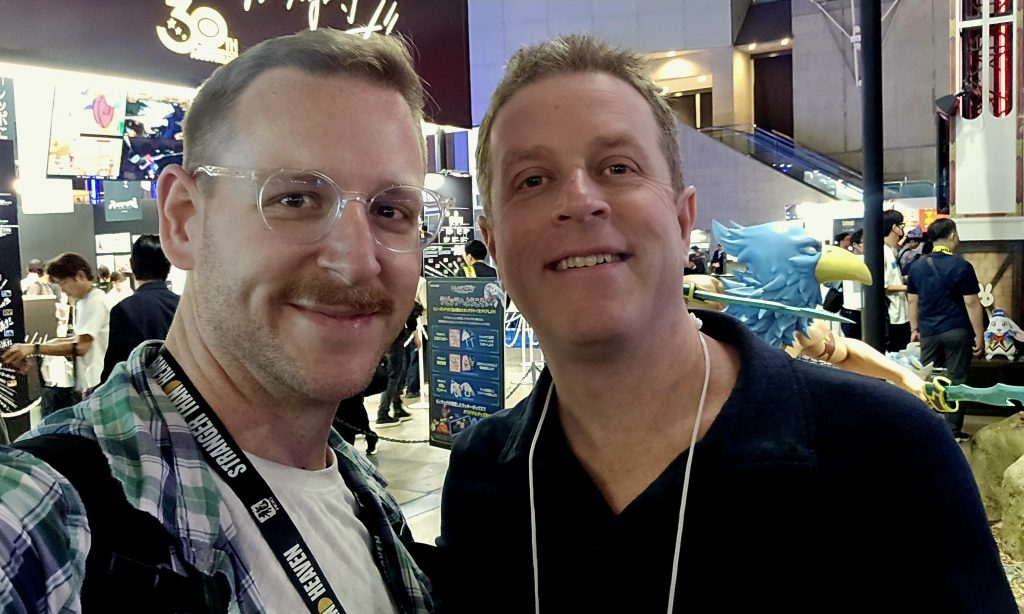
It looks great, it feels electric, and, for a first-timer, it leaves you with stars in your eyes. Yes, it can be overwhelming, but the 11 halls that the show is spread across are dramatically easy to navigate. You’ve got Halls 1 – 8 running in a straight line, all linked up, and then Halls 9 – 11 are in a single building a short walk away, over a skybridge. It’s so accessible.
In terms of more ‘tertiary’ considerations, I’d say that the food options were solid, the bathroom facilities were accessible and relatively clean, and the security presence was good. There were attendants everywhere focused on crowds, and on several occasions, I saw police and security operatives actively patrolling the halls.
The merchandise spaces were a boon as well. I was disappointed at other events to see the usual mystery bag scams running wild, flanked by generative AI-backed creations, body pillows, and Funko Pop figures. At the Tokyo Game Show, almost every merch booth was represented by publishers, developers, and licensed vendors. It felt much more high-tier and premium, but the prices didn’t reflect that, fortunately.
And let’s not forget where you are. If you hop on the train for thirty or forty minutes from the Messe, you’ll find yourself in the heart of Tokyo, one of the most incredible cities on Earth. It certainly beats Cologne in that respect (I’ve got big love for Gamescom, of course).
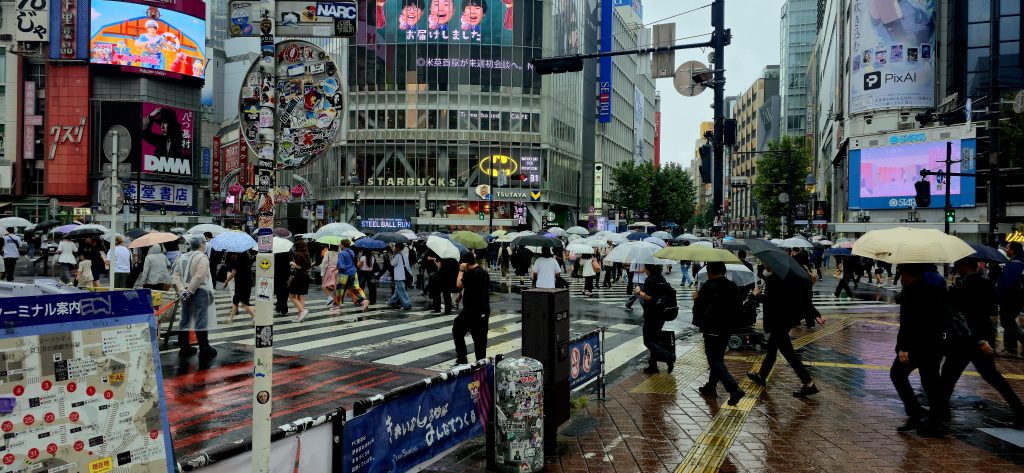
I Need A Second Round To Pass Full Judgment
My Tokyo Game Show experience was a toe dip in the ocean of opportunity, I’d say. I’ll be transparent and say that I didn’t get to half of what I had planned.
You’ve got B2B tech vendors, a massive event stage packed with talks and panels, and games that are stepping up to the show to offer a public demo for the first time. There are lounges, awards ceremonies, cosplay parades, academy showcases, and workshops.
It’s a one-stop event that offers entertainment and education in all shapes and sizes.
I don’t think I could have seen everything even with seven days at the event, and jamming everything I had planned into a three-day sprint was hugely ambitious.
That’s why, if I get a chance to travel to Tokyo next year for TGS, I’ll be strapping a jetpack on, or something. I’ll be going HAM.
But before I wrap up, what needs to be improved?
Well, not having 55,000 people attending a business-exclusive day would be a start. In hushed tones, many folks complained about the slew of influencers managing to get early access on these days, and press badges being handed out like candy to all comers.
I’ve got no idea what the thresholds are for the accreditation process, but you can’t honestly tell me queuing for more than an hour for a game on a business day makes sense.
I’d also like to see the opening times extended. I’m not sure if it’s a geographical thing, but for the most part, the show was open from 10 AM until 5 PM, which isn’t a very long day. By contrast, Gamescom remains open from 9 AM until 8 PM most days. Those extra hours mean a lot for visitors looking to get a lot done.
More exclusive opportunities for press should also be afforded. I felt like there were almost zero behind-closed-doors or early bird activities available for members of the press. This is a rather selfish request, but it would be nice to fly the 12,000-mile round trip and be rewarded with something truly exclusive.
Again, maybe it’s a geographical thing, or something to do with the Makuhari Messe not being all that large.
That’s about it!
Did you go to this year’s Tokyo Game Show? Let us know what you thought about the event on the Insider Gaming Discord server.
For more Insider Gaming coverage, check out the news that Riot Games has punished hundreds of thousands of League and VALORANT players, and don’t forget to sign up for our weekly newsletter

Grant has been gaming for 30+ years and in the industry for 10+. You'll probably find him playing a post-apocalyptic game or an extraction shooter somewhere.
More from Grant Taylor-Hill