






Team Liquid and SAP invited Insider Gaming to Team Liquid’s Utrecht Headquarters, the base of Team Liquid Co-Founder and CEO Victor ‘Nazgul’ Goossens.
In a wide-ranging discussion, Insider Gaming spoke to Goossens about Team Liquid’s 2026, the future of monetization in esports, and the implications of the Valorant 2027 partnership model.
Team Liquid was one of 32 organizations to be awarded Valorant Partner Status for 2027 and 2028, with Riot reducing the number of partner teams from 48 to 32. The reduction of slots has caused significant fallout in the Valorant esports space, with several notable organizations withdrawing from Valorant competition while others consider their continued involvement.
Insider Gaming Interview with Team Liquid Co-CEO Victor Goossens (Recorded October 21, 2026)
In terms of Liquid as a competitive organisation, how would you summarise the year on a competitive level across esports?
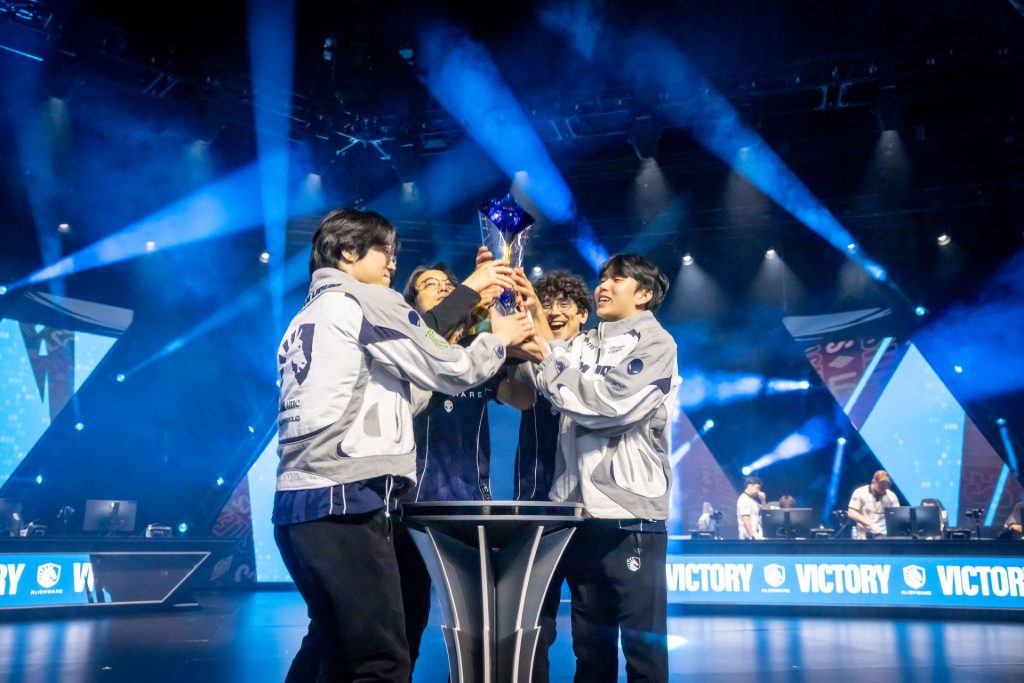
Actually, it’s been a good year. I think 2025 was one of our greatest years, probably only rivalled by 2019 when we became Grand Slam champions in Counter-Strike and two-time champions in the LCS.
This year, we won Race World First in World of Warcraft. We consider MLBB as one of the most important games for Team Liquid, and we’ve won both the Filipino League and international tournaments there. We just won the LCS in League of Legends, and, I think, two international tournaments in Dota.
It’s been a very good year for us. If you are a Counter-Strike fan, you might say it wasn’t so great, and that would be true.
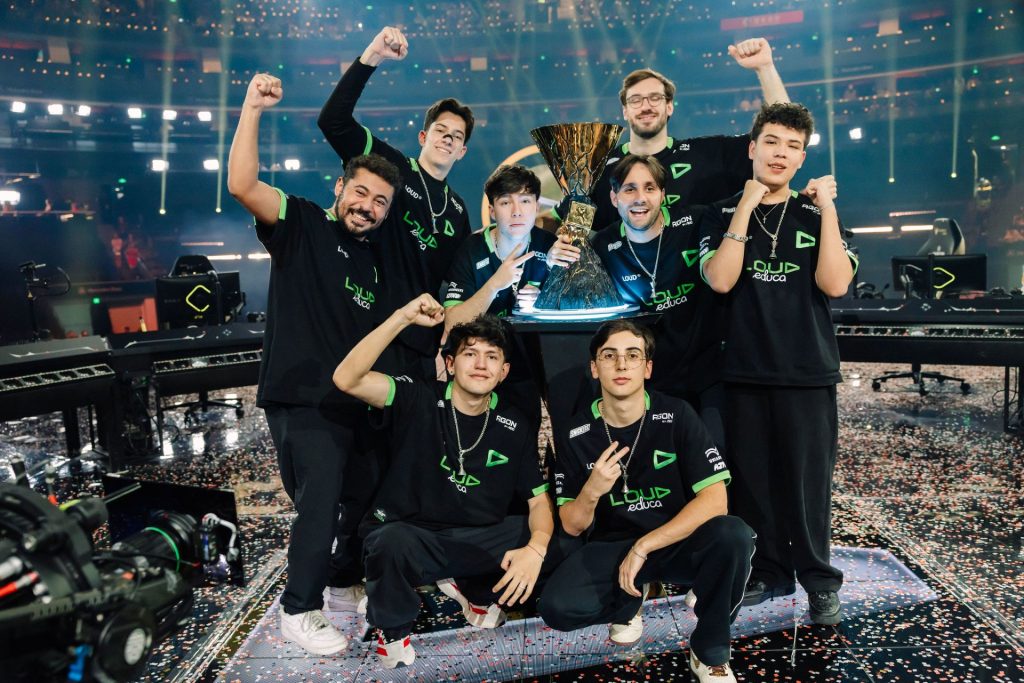
Out of the Tier 1 games, Dota, League of Legends and MLBB, were very good. In Valorant, we qualified for Champions and finished second in Europe a pretty good result. Counter-Strike was not so good.
“I can promise you Dota is not in a healthy shape. Besides Team Liquid and a little bit NAVI, there are no what I would consider professional organisations in Dota anymore. All of Team Liquid’s competitors in Dota, they pay well, but they are basically organisations ran by betting companies. That’s not a healthy ecosystem.”
Team Liquid Co-CEO Victor Goossens on the state of Dota 2
In terms of the League of Legends roster, is there anything you can point to that you think has enabled that roster to break through and win the LCS?
It is very difficult in sports to point at one thing and say that’s the reason. I think we have five incredibly talented players playing for us. And that doesn’t happen overnight.
You find one great talent, like Yeon, for example, and you provide him the environment and resources that allows him to stay long term.
You build around a captain like CoreJJ, who is extremely well respected in North America. Then you keep trying and adding more and more great talent to it, and sometimes it works and sometimes it doesn’t.
When lightning hits in a bottle you suddenly have five great players who are great teammates as well. In League of Legends we have an incredible coach with Spawn. We’re always so thoroughly impressed with him, whether that’s strategy or social dynamics or being an inspiration for the rest of the team or even on the topic of health.
He also cares a lot about doing sports. Great coach, great players, and sometimes everything comes together. That’s how it feels right now. It does not feel like a one-time thing. It feels like this team can do more. Worlds is about to start.
Team Liquid has come very close but has never made it out of the group stage in the history of us being in League of Legends. But again, we go to Worlds with a lot of hopes to achieve that. I think we feel very good about the team.
“If we had not gotten it, I don’t think I would be out there criticising what they are building.”
Goossens on the VCT Partnership fallout
In Valorant, you have been awarded Partnership for 2027 and 2028. I wanted to ask about the partnership in terms of your reflections on getting the partnership. But also, could I ask you to detail a hypothetical scenario where you weren’t awarded it and what kind of implications that would have?
It’s such a good question. I’ve seen a lot of discussion over the last few days. Valorant, which has focused a lot on organisations that didn’t secure a partnership, then criticising the partnership, and the community following that sentiment. I think that is temporary.
As you know from Counter-Strike, once the competitive system gets rolling, people love to watch, and it will all be fine. I’ve been following the dialogue, and I’ve actually been thinking about what my opinion of it actually is.
We felt confident we would get it [a partnership], but it was never guaranteed, and we had our own doubts. Like, ‘Hopefully we will get it’; it’s so important, it’s such a big deal. But if we had not gotten it, I don’t think I would be out there criticising what they are building.
I think that their system is quite incredible, and it’s one of the best and most strong esports ecosystems that I see being built.
I think for 2026 and this stage of esports, having some partner teams, where there are organisations where you can promise them that their investment will be rewarded in some way, attracts professional high-quality organisations that therefore will invest in your game and sign players to long-term contracts. So you can reward those players handsomely and develop their brands and associated storylines in your game.
The extreme other example would be a completely open system like Dota with no digital item revenue shares, no partnerships, no publisher reward for playing tournaments, and I can promise you Dota is not in a healthy shape.
Besides Team Liquid and a little bit NAVI, there are no what I would consider professional organisations in Dota anymore. All of Team Liquid’s competitors in Dota, they pay well, but they are basically organisations ran by betting companies. That’s not a healthy ecosystem.
“Below the 32 [VCT partners], there’s still $4 million being shared outside of the 32 with those clubs. Well, I can promise you that no publisher, no ecosystem, comes close to sharing that amount of money with clubs that are outside of the top 32. I think that is a healthy way of looking at their system.”
Goossens on the Valorant 2027 ecosystem
In Valorant, the monetization and amount of money they [Riot] share with the partner clubs, both in the past, in the previous partnership, is financially significant.
You have the 32 partner teams. So currently there are 48. They’ll go to fewer partner teams, from 48 to 32, and they go into a much more open system. I do like this approach for shooters, with the travelling circuit and in-stadium events.
It’s more open than before, but it still gives certainty and reliability for 32 professional organisations to know for sure they will receive investment into their scene and into the players. I think that is the right balance.
The teams that don’t make it to the partnership, if they qualify for Cups and Majors and Champions, will have opportunities to earn money. I think Riot has set aside something like $4 million to be paid to these clubs. So now you have 32 partner teams, and yes, they will earn more, there’s still significant financial support available to organisations outside those groups.
I can promise you that no publisher, no ecosystem, comes close to sharing that amount of money with clubs that are outside of the top 32. I think that is a healthy way of looking at their system and a smart way of building.
Do I understand that if you don’t make it, that’s much less than what Liquid makes? It’s true. That is unquestionably true.
“When you look at organisations that are criticising it, first of all, all of them applied for it. All of them said, I want this. I feel it’s not so fair to say, I want this. I would be very happy if I got in, but now that I’m not, I’m going to tear down and criticise everything I was applying for.”
Goossens on organizations that missed out on VCT Partnership
But it’s also true in, say, the Premier League, which is an open system. There’s nobody where they say, ‘Oh, because you’re a partner, you get more.’ But in the Premier League, you do get more if you finish on top. You do get more if your viewership is higher.
It’s always the same clubs winning anyway. It’s not like the Premier League, which is a more open, non-partner-specific system. It’s not like the end result of that is so much fairer. I think that would be an illusion. And the fairest competitions, if you look for fairness for the participants, are the franchise systems of North America.
The bottom will get their draft picks so they can go to the top again. There’s a constant rotation of winners in North America, but then it’s not open. So it’s pretty complicated. It’s very easy to criticise.
And for me, when you look at organisations that are criticising it, first of all, all of them applied for it. All of them said, I want this. Of course. I feel it’s not so fair to say, I want this. I would be very happy if I got in, but now that I’m not, I’m going to tear down and criticise everything I was applying for. Like, come on.
And some of them are in partnerships in other games. So, for example, Rainbow Six, Ubisoft, has a similar programme. In Rainbow Six, Team Liquid and a few dozen other organisations are part of the partner programme, and we are allowed digital items, and others are not, and that is unfortunate, but there’s also a limit to how much publishers can do.
Some organisations are in the partner programme with Ubisoft, are enjoying that status, are enjoying that advantage, then did not make it Valorant and are criticised the same system.
“I suspect we would have stayed in the game with a team based on younger talents, for example, where we feel if you get lucky, there’s still high upside, but it’s not so expensive as well.”
Goossens on Team Liquid’s plans if they missed out on Valorant partnership
I think a lot of this talk came from Ludwig Ahgren (co-owner of Shopify Rebellion and streamer). Ludwig’s point was that if they develop a team, they have no chance of keeping hold of those players because the resources of partner teams are going to be so great. So what would you have done if you were not a partner team?
I think we would have had a team. To be honest, that decision can only be fully made once you actually look at, like, what team can we actually build? So we would have said, okay, we can spend less. How much can we spend? Who can we get for it?
I suspect we would have stayed in the game with a team based on younger talents, for example, where we feel if you get lucky, there’s still high upside, but it’s not so expensive as well.
I think that would have been Team Liquid’s approach, most likely. But it’s hard to say for a fact, because you would actually have to see the situation played out, but I think we would have been in the game.
There are a few other organisations that have already said they will be as well. I think NAVI is one of them, for example.
Yes, they seem to be doing kind of the thing you are highlighting, which is that they’ve made their Junior team effectively their only team.
And it has a lot of potential also.
Like, this year, all of the big tournaments in Valorant, I think, were won by teams with a lot of rookies. So, it is a game where the younger generation has a good chance of performing well. I think that probably would have been our approach.
But then is the model from a business perspective to then sell those players to a partner team?
It can be. And it’s interesting, because it seems to me like Shopify lost their players as free agents. They found great talents, they signed them on short-term contracts, and then when they did well, they just left, and Shopify had no control over this.
That’s not how it should work. You should sign your talents to a three-year contract. So that you either can say, ‘We will keep them,’ or you can say, ‘Someone else needs to pay a high buyout.’
And that’s how it also functions in football, for example. Where, let’s say, on a European level, in the Netherlands you have Ajax. They are great at education and building talent. A big part of their business model is selling that talent for buyouts. That is a business in sports.
In an open system, that should be the business model for playing in tier 2 or below, and there’s nothing wrong with that. But if you sign all of them to one-year contracts, and all of them walk out for free, that’s bad.
I don’t understand fully what happened with Shopify, or why all those players seemingly have left without major buyouts.
“Consumer behaviour in esports have been slow to develop. The monetization from the individual fan is still fairly low. I believe that’s a matter of time, but we also should not kid ourselves and think it’s suddenly different tomorrow or next year. That’s going to require quite a bit of time… I don’t think media rights will ever get to a sports level, but it doesn’t need to be zero either.”
Goossens on esports monetization
But let’s say in Counter-Strike, for example. There’s a whole business model of Tier 2 and Tier 3 organisations that just run on buyouts. Your Tier 1 organisations see the talent, they pay a buyout, and you keep your business running like that.
If you ever manage to find a moment in time where you can keep them together, or you can quickly turn a high buyout around and get another good player, and you can actually get yourself into the top, that’s also possible.
I think it’s a very normal situation to sell your players and run a sports organisation one level below the very top. I don’t fully understand, because the only answer to what Ludwig is saying is actually just a franchise model like the NBA.
Nobody can take your players in the NBA. Nobody can. It’s nice. There are no buyouts. Buyouts don’t exist in the NBA. You trade them for draft slots, etc. and then the draft slots allow you to be competitive again.
You trade a player at the right time, you get your draft slots, and with a 5-year strategy you can become champions. But he’s definitely not saying, ‘I want a franchise system’ either.
I don’t see a much better system. To solve his questions, I don’t think an open system will do better than the system that’s being provided. It’ll function very similarly, as Counter-Strike functions like that as well.
Earlier today, you showed us a presentation that quoted a 641 million global audience for esports, but also today, EG has announced that they’re going to shut down operations. I wanted to talk about how you see monetization and the business model for esports. Do you think we’ve arrived at the end model? Or do you think that something else is coming that’s going to change how monetization works in the space?
I think esports still has to go through a tremendous amount of development and evolution to get to a healthy state.
We’re not there, that is for sure. The things that I think are pretty good are one, sponsorship, and two, digital items. But even in those two regards, it’s far from optimised.
The two areas where we lag behind hugely is one is media rights, and two is actual spending by the fans. The esports fan spends very little on esports. If you compare that to, let’s say, FC Utrecht, the football team from Utrecht.
Fans from the city are spending a tremendous amount on tickets and jerseys and scarves, and on digital subscriptions to follow the Dutch Football League. For some reason, that fandom, sports, and consumer behaviour in esports have been slow to develop. The monetization from the individual fan is still fairly low.
I believe that’s a matter of time, but we also should not kid ourselves and think it’s suddenly different tomorrow or next year. That’s going to require quite a bit of time.
I don’t think media rights will ever get to a sports level, but it doesn’t need to be zero either. That will also go through positive development.
Maybe the last one is just the ecosystem development itself. If you are a Dutch football club, you earn significant revenues from the Eredivisie and from the Champions League if you make it.
These systems have been built sometimes 50, sometimes 100 years ago. In many of our sports, they are not built at all.
Building the ecosystem so that the tournament circuit is monetized properly, whether through sponsorship, media rights, or digital items, and then as a league or tournament shared with teams, still will go through a lot of development as well.
It’s still not easy to run an organisation in esports.
END OF INTERVIEW
Do you think esports is growing or in trouble? Share your thoughts with us on the Insider Gaming Discord.
In other news, see the news that MIBR benched their roster. And for even more Insider Gaming delivered directly to your inbox, sign up for our newsletter.

Darragh is an Esports Journalist for Insider Gaming specialising in Counter-Strike. He loves to explore how esports teams work, or why they very often do not.
More from Darragh Harbinson



Comments